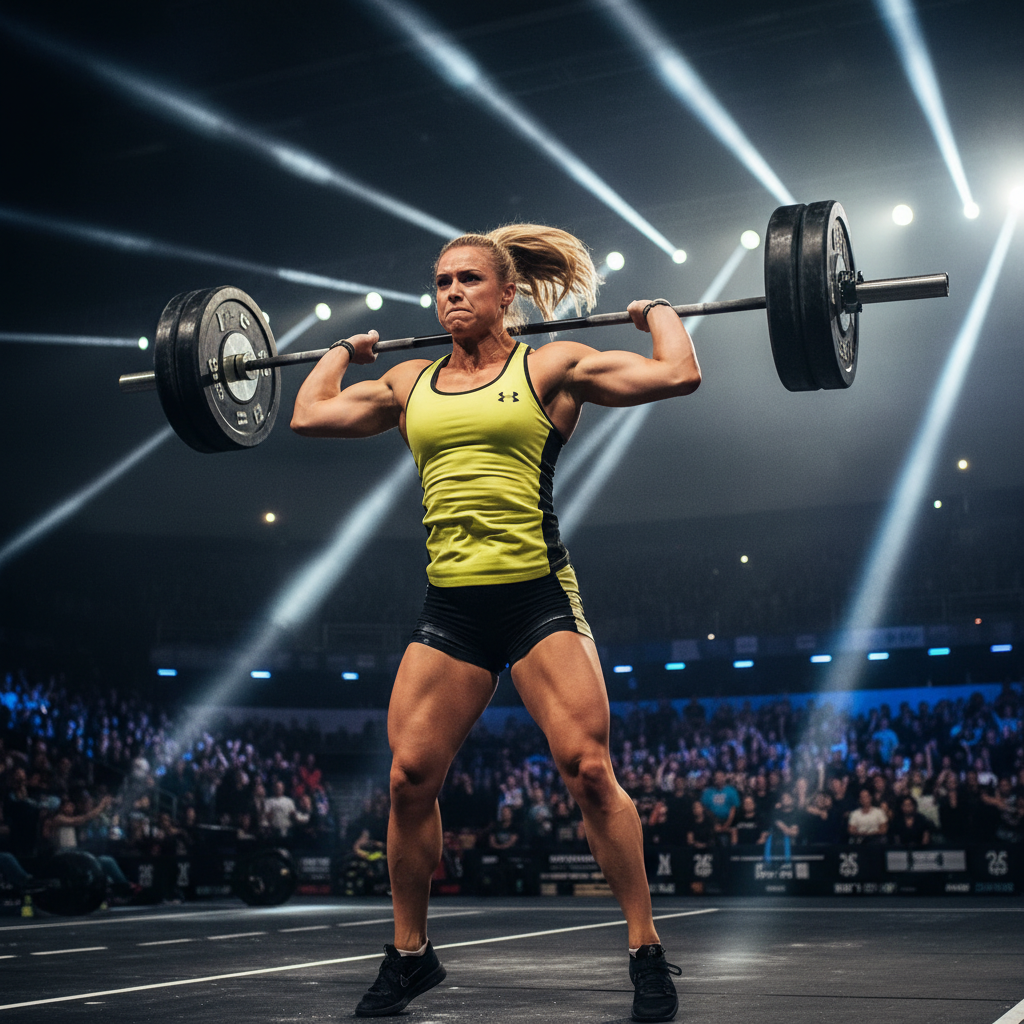
Tia-Clair Toomey: Training Through Her Second Pregnancy
Six-time champion. Two Olympic appearances. Now: motherhood, again. How Tia is staying active.
The GOAT Does Not Rest
When Tia-Clair Toomey-Orr announced her second pregnancy in late 2025, the CrossFit world held its collective breath. Not because a six-time Games champion having a baby is unusual — it is, by any standard, the most normal thing in the world. But because Tia-Clair Toomey does not do things normally.
The most decorated female athlete in CrossFit history, a two-time Olympic weightlifter, and the holder of virtually every meaningful record in the sport was not about to spend nine months on the couch. Within weeks of the announcement, Toomey was posting training videos that made recreational CrossFitters feel inadequate about their non-pregnant fitness levels.
Her second pregnancy has become a lightning rod for a debate that extends far beyond CrossFit: how should elite athletes approach training during pregnancy, and who gets to have an opinion about it?
"My body, my baby, my doctor, my decision. Everyone else can have a seat." — Tia-Clair Toomey-Orr, responding to social media commentary
The First Pregnancy: A Blueprint
Toomey's first pregnancy, which resulted in the birth of her daughter Willow in 2023, provided a blueprint for how she would approach the second. She trained throughout the pregnancy, modifying movements as needed but maintaining a level of intensity that surprised even her inner circle.
The postpartum return was equally remarkable. Toomey competed at a high level within months of giving birth, demonstrating a recovery capacity that blurred the line between superhuman genetics and meticulous preparation. Her coach and husband, Shane Orr, managed the programming with input from her medical team, creating a template that balanced athletic ambition with maternal health.
The first pregnancy proved that Toomey could maintain her fitness through pregnancy and return to elite competition afterward. The second pregnancy is testing whether she can do it again — older, with a toddler at home, and with the added pressure of a sport that has continued to evolve in her absence.
What Training Looks Like Now
Toomey's training during her second pregnancy, as documented on her social media and YouTube channel, follows a modified version of her competitive programming. The key adjustments include:
- ▸Reduced maximal loading — Heavy one-rep-max lifts have been replaced with moderate-weight, higher-rep work
- ▸Modified gymnastics — Kipping movements and inversions have been scaled or eliminated in favour of strict variations
- ▸Maintained engine work — Rowing, biking, and ski erg sessions continue at near-competitive intensity
- ▸Core modification — Traditional ab work replaced with pelvic floor-focused stability exercises
- ▸Recovery emphasis — More time allocated to mobility, sleep, and nutritional optimisation
The training is not performative. Toomey has been clear that the goal is maternal and fetal health first, with fitness maintenance as a secondary benefit. But her version of "fitness maintenance" would constitute peak performance for most competitive CrossFitters.
The Science Behind Pregnant Athlete Training
Toomey's approach has reignited a conversation about exercise during pregnancy that the medical and fitness communities have been having for decades — often talking past each other.
What the Research Actually Says
The medical consensus on exercise during pregnancy has shifted dramatically over the past 30 years. Where doctors once advised pregnant women to limit physical activity, current guidelines from the American College of Obstetricians and Gynecologists (ACOG) and similar bodies worldwide actively encourage exercise during uncomplicated pregnancies.
The key findings from the research are clear:
- ▸Regular exercise during pregnancy is associated with reduced risk of gestational diabetes, preeclampsia, and excessive weight gain
- ▸Cardiovascular fitness can be maintained and even improved during pregnancy with appropriate programming
- ▸Strength training is safe and beneficial when loads and movements are appropriately modified
- ▸High-intensity exercise has not been shown to increase risk of adverse outcomes in women who were fit before pregnancy
- ▸Core and pelvic floor work during pregnancy is associated with improved outcomes during delivery and faster postpartum recovery
The caveat — and it is an important one — is that these findings apply to uncomplicated pregnancies in women who were physically active before conception. Individual variation is enormous, and medical supervision is non-negotiable.
The Elite Athlete Exception
What makes Toomey's case unusual is not that she is exercising during pregnancy — millions of women do that. It is the intensity at which she is operating. The research on exercise during pregnancy is largely based on recreationally active populations. Data on elite athletes training at near-competitive intensities during pregnancy is scarce, partly because the population is so small.
The few case studies that exist — from track and field, swimming, and Olympic lifting — suggest that elite athletes can safely maintain high training loads during pregnancy, provided they have appropriate medical monitoring and are willing to modify based on how they feel.
The question is not whether pregnant women should exercise — the science is clear that they should. The question is where the line falls between beneficial exercise and excessive risk, and who gets to draw that line.
The Role of Shane Orr
Shane Orr, Toomey's husband and long-time coach, plays a crucial role in the training equation. Orr has been programming Toomey's training for her entire elite career, and his understanding of her body, her limits, and her competitive psychology is unmatched.
During the pregnancy, Orr's role has expanded to include daily communication with Toomey's medical team, real-time load adjustment based on how she feels during sessions, and the psychological management of an athlete who is genetically incapable of taking it easy.
Their partnership — both personal and professional — is one of the most successful athlete-coach relationships in CrossFit history, and it is being tested in a context that no programming textbook covers.
The Community Response: Polarised, Predictable
The response to Toomey's pregnancy training from the CrossFit community — and the broader fitness world — has followed a depressingly predictable pattern.
The Supporters
One camp celebrates Toomey's approach as empowering, evidence-based, and consistent with her identity as an elite athlete. This camp points to the research, defers to Toomey's medical team, and argues that a woman who has spent 15 years understanding her body at the highest level is better positioned than any social media commenter to make decisions about her training.
The support is particularly strong among female athletes and coaches, many of whom have experienced the pressure to stop training during pregnancy and felt diminished by the assumption that pregnancy requires physical inactivity.
The Critics
The other camp expresses concern — sometimes genuine, sometimes performative — about the risks of high-intensity training during pregnancy. Critics point to the lack of research on elite-level training during pregnancy, the potential for thermoregulation issues, and the general principle that pregnancy should be treated with caution.
Some critics are motivated by genuine medical concern. Others, it must be said, are motivated by a discomfort with seeing a pregnant woman doing things that they themselves cannot do. The intersection of pregnancy, athleticism, and social media produces a particularly toxic brew of unsolicited opinions.
The Gender Dimension
The debate around Toomey's training is inescapable from its gender context. Male athletes who train through injuries, illness, and personal challenges are celebrated for their dedication. Female athletes who train through pregnancy are questioned about their priorities.
This double standard is not unique to CrossFit, but the sport's social media-driven culture amplifies it. Every training video becomes a referendum. Every heavy lift becomes a controversy. Every comment section becomes a battleground between those who trust women to make decisions about their own bodies and those who do not.
"Nobody asked Rich Froning if he was being irresponsible for training hard while his wife was pregnant. But when the pregnant woman IS the athlete, suddenly everyone's a medical expert." — A comment that resonated across CrossFit social media
What Comes Next: The Return Question
The most compelling question surrounding Toomey's second pregnancy is not about the training itself — it is about what happens after.
The Comeback Timeline
Based on her first pregnancy experience, Toomey's return-to-competition timeline would likely follow a similar pattern:
- ▸0-6 weeks postpartum: Recovery-focused, low-intensity movement
- ▸6-12 weeks: Gradual reintroduction of CrossFit-specific training
- ▸3-6 months: Return to competitive training loads
- ▸6-9 months: Ready for competition
If the baby arrives on schedule in mid-2026, this timeline would put Toomey back in competitive shape by early 2027 — potentially in time for the 2027 CrossFit Open.
Will She Compete Again?
Toomey has been deliberately vague about her competitive future, and for good reason. Making public commitments about returning to elite competition while pregnant creates pressure that serves no one.
The indicators, however, point toward a return. She has not retired. She has maintained competitive fitness. And she has spoken about wanting to show her daughters that motherhood and athletic excellence are not mutually exclusive.
If she returns, the storyline writes itself: the greatest female CrossFit athlete ever, returning from a second pregnancy, chasing a seventh Games title that would cement a legacy already beyond debate.
The Legacy Either Way
Whether or not Toomey competes again, her second pregnancy has already accomplished something significant. She has provided a highly visible, meticulously documented example of elite athletic training during pregnancy. She has challenged assumptions, provoked conversation, and — most importantly — demonstrated that pregnancy is not a limitation but a different kind of challenge for an elite body.
Six Games titles. Two Olympic appearances. Two pregnancies trained through at elite level. The numbers tell a story of an athlete who refuses to accept boundaries — not recklessly, but deliberately, with medical support and self-awareness.
Tia-Clair Toomey-Orr is not training through her pregnancy to prove a point. She is training through her pregnancy because that is who she is. The fact that it also happens to prove a point is a bonus the sport did not ask for but desperately needed.
Athlete Profile
Gym Affiliate: CrossFit PRVN (formerly trained at CrossFit Mayhem with Rich Froning) Coach: Shane Orr (husband) Stats: Height: 5'4" (163cm) | Weight: 128 lbs (58 kg) | Born: July 22, 1993 | Country: Australia | Also: Olympic Weightlifter (2016 Rio Olympics)
Career Competition Results
| Year | CrossFit Games | Semifinal/Regional | Open (Worldwide) |
|---|---|---|---|
| 2015 | 2nd (Rookie of the Year) | 3rd (Pacific) | 63rd |
| 2016 | 2nd | 2nd (Pacific) | 82nd |
| 2017 | 1st | 2nd (Pacific) | 18th |
| 2018 | 1st | 1st (Pacific) | 12th |
| 2019 | 1st | 1st (Wodapalooza), 1st (Rogue) | 6th |
| 2020 | 1st | 1st (Mayhem), 1st (Wodapalooza) | 4th |
| 2021 | 1st | 1st (Mid-Atlantic) | 1st |
| 2022 | 1st | 1st (Torian Pro) | 2nd |
| 2023 | Did not compete (pregnancy) | — | 2831st |
| 2024 | 1st | 1st | 2610th |
| 2025 | 1st | — | 144th |
Record Book
- ▸8x CrossFit Games Champion — most titles in history (male or female)
- ▸33+ individual event wins at the Games — all-time record
- ▸2016 Olympic Weightlifter — competed at Rio Olympics (58kg, 14th)
- ▸2018 Commonwealth Games Gold — weightlifting 58kg
- ▸4x Rogue Invitational Champion
- ▸2x Wodapalooza Champion
- ▸Announced stepping away from CrossFit competition in April 2025
- ▸Began competing in HYROX in late 2024 — set Women's Doubles world record
More from BoxJunkies
Best Lifting Belt for CrossFit 2026: Support That Moves With You
A good lifting belt should become invisible in the middle of a heavy squat or clean. We tested the top CrossFit-compatible lifting belts to find the ones that actually disappear when you need them to.
Best Wrist Wraps for CrossFit 2026: Protect Your Lifts Without Losing Wrist Mobility
Wrist pain is the silent CrossFit career-ender. The right wrist wraps keep you training through heavy pressing cycles and overhead work without sacrificing mobility. Here's our 2026 guide.
TYR CXT-3 Trainer Review: The Underdog CrossFit Shoe That Deserves Your Attention
TYR is known for swimwear. Their CXT-3 training shoe is trying to change that. After 6 weeks of daily CrossFit use, here's whether it's worth taking the leap on an unknown brand.