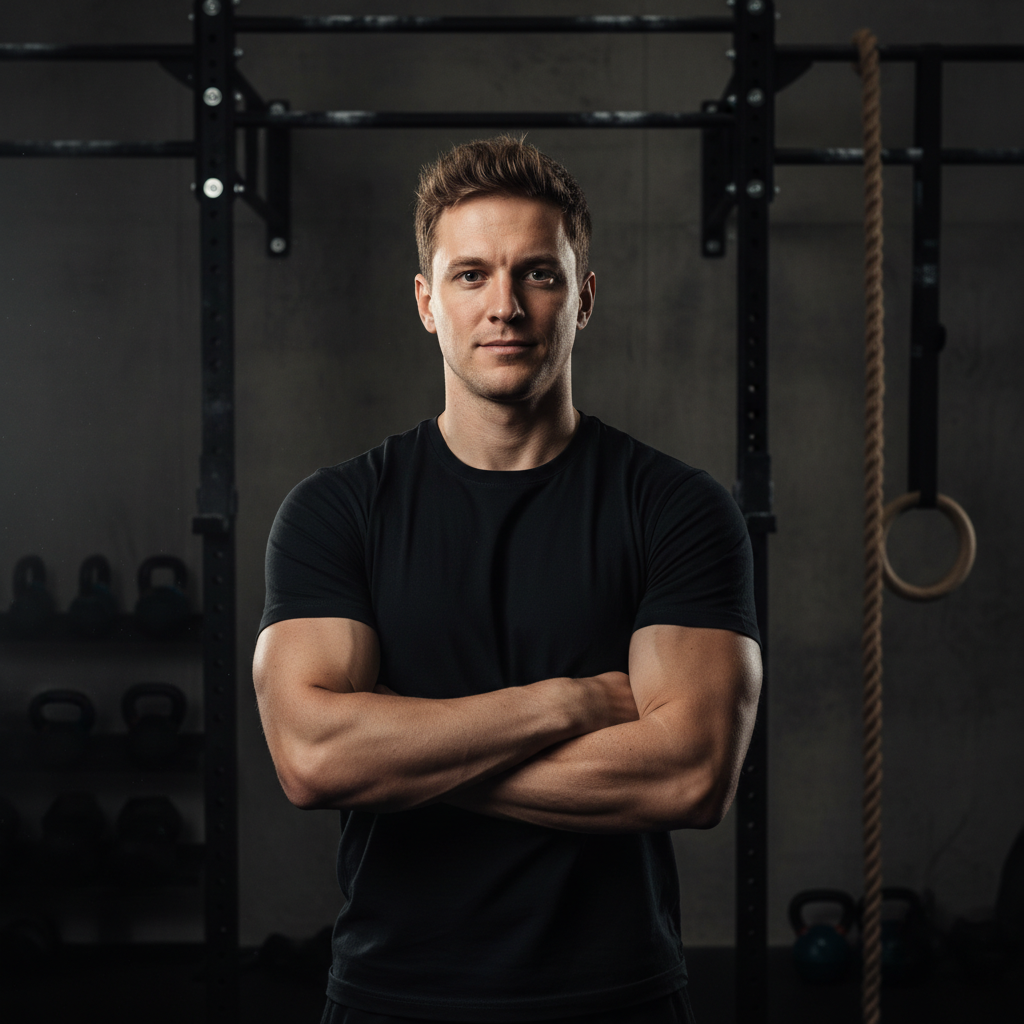
Andrew Hiller: CrossFit's Most Controversial YouTuber
He got banned, he called everyone out, and he kept growing. Inside the Andrew Hiller story.
The Rise of CrossFit's Most Polarising Voice
Love him or loathe him, Andrew Hiller has become the single most talked-about media figure in competitive CrossFit — and he has never competed at the Games. From a modest YouTube channel dissecting workout standards to a full-blown media operation that makes athletes, judges, and even CrossFit HQ squirm, Hiller has carved out a niche that nobody asked for but everybody watches.
His formula is deceptively simple: take publicly available competition footage, slow it down frame by frame, and ask whether the reps actually count. The results have been explosive. In a sport that prides itself on measurable, observable, repeatable performance, Hiller has appointed himself the unofficial standards police — and the community cannot look away.
"I'm not trying to be liked. I'm trying to be accurate." — Andrew Hiller
From Garage Athlete to Full-Time Creator
Hiller's origin story is familiar to anyone in the CrossFit world. He trained at a local affiliate, competed in local throwdowns, and never cracked the elite level. What set him apart was not his Fran time but his eye for detail. Early videos on his channel focused on movement breakdowns and training tips — the kind of content that populates thousands of CrossFit YouTube channels.
The pivot came in 2021, when Hiller started publishing frame-by-frame analyses of Games athletes during competition. He questioned lockout standards on handstand push-ups, called out no-reps on muscle-ups, and — most controversially — suggested that certain athletes were receiving preferential treatment from judges.
The videos went viral. Not because the production was slick (it was not), but because Hiller was saying things that coaches and athletes had been whispering in warm-up areas for years. He gave a megaphone to every frustrated competitor who had ever watched a rival get credited for a questionable rep.
The Content Machine
By 2023, Hiller was uploading daily, sometimes multiple times a day. His content had evolved from simple rep-counting to full investigative pieces. He examined PED allegations, questioned sponsorship deals, and published deep dives into athlete timelines that bordered on forensic analysis.
His subscriber count surged past 200,000, and his videos routinely racked up hundreds of thousands of views — numbers that rival or exceed CrossFit's own media output. Whether the topic was Ricky Garard's return after a doping ban, questions about Sara Sigmundsdóttir's training environment, or frame-by-frame breakdowns of Justin Medeiros' ring muscle-ups at the Games, Hiller's content drove conversation.
The Athlete Divide: Hero or Villain?
The competitive CrossFit community is deeply split on Hiller, and the divide reveals something interesting about how athletes view media, accountability, and the unwritten rules of the sport.
Athletes Who Engage
Some athletes have embraced Hiller's role. Danielle Brandon has appeared on his channel, trading barbs with evident enjoyment. Saxon Panchik has been open to dialogue, and several mid-tier athletes have credited Hiller with pushing the conversation about judging standards forward.
The logic is straightforward: if the sport wants to be taken seriously, it needs to tolerate — even welcome — outside scrutiny. Every major professional sport has its critics, analysts, and commentators who hold participants accountable. Hiller, in this view, is simply filling a role that the sport's own media apparatus has been too conflicted to occupy.
"Whether you agree with his takes or not, Hiller has forced a conversation about standards that was long overdue." — Community sentiment echoed across Reddit and social media
Athletes Who Push Back
On the other side, a significant number of elite athletes view Hiller as a net negative. Tia-Clair Toomey has been openly dismissive, and several Games athletes have spoken — mostly off the record — about the toll of having their performances dissected by someone who has never competed at their level.
The criticism is not just about hurt feelings. Athletes point out that Hiller's analyses, while visually compelling, often lack context. Camera angles can be deceptive. Judges on the floor have perspectives that a zoomed-in YouTube clip cannot replicate. And the court of public opinion, once activated by a viral video, does not wait for nuance.
There is also the question of incentives. Hiller's revenue model is built on controversy. The more provocative the claim, the more views it generates. Athletes argue that this creates a structural bias toward finding fault, even when the evidence is ambiguous.
The Judge Problem
Perhaps Hiller's most lasting contribution has been to the conversation about judging at the elite level. CrossFit has historically relied on volunteer judges for most of its competitive season, with professional judging only appearing at the Games and select invitationals. Hiller's videos have exposed the inconsistency that results from this system.
After multiple viral videos highlighting no-rep controversies at the 2023 CrossFit Games, CrossFit LLC took steps to improve judging protocols, including additional judge training, multiple camera angles for review, and clearer standards documents for athletes. While CrossFit never publicly credited Hiller, the timing was hard to ignore.
The HQ Relationship: Uneasy at Best
CrossFit's relationship with Hiller has gone through several distinct phases, each revealing something about the organisation's evolving approach to independent media.
The Ignore Phase
Initially, CrossFit HQ treated Hiller the way most organisations treat gadflies: by pretending he did not exist. No official responses, no engagement, no acknowledgment. The strategy was simple — do not amplify the signal.
This approach worked until it did not. As Hiller's audience grew, ignoring him became its own statement. Athletes were being asked about his videos in interviews. Commentators were referencing his analyses during broadcasts. The signal was amplifying itself.
The Engagement Phase
By 2024, CrossFit had shifted to cautious engagement. Hiller received media credentials for select events. He was included in press conferences. The thinking appeared to be that bringing him inside the tent would moderate his approach.
The results were mixed. Hiller continued to publish critical content, but he also produced more nuanced pieces that acknowledged improvements in judging and competition management. Access, it turned out, did not silence him — but it did add depth.
The Current State
In 2025-2026, the relationship has settled into an uneasy equilibrium. Hiller attends major events, engages with athletes and staff, and continues to publish daily content. CrossFit neither endorses nor condemns his work, treating him as part of the media landscape rather than an adversary.
The fact that CrossFit's biggest independent media voice is a critic rather than a cheerleader says something important about where the sport is in its maturation cycle.
The Business of Being Controversial
Behind the hot takes and frame-by-frame breakdowns, Hiller has built a legitimate media business — and the economics are worth examining.
Revenue Streams
Hiller's income is diversified across multiple channels:
- ▸YouTube ad revenue from daily uploads averaging 100,000-300,000 views
- ▸Sponsorship deals with supplement companies, equipment brands, and training apps
- ▸Merchandise featuring his catchphrases and branding
- ▸Paid collaborations and appearance fees at CrossFit events and expos
- ▸Patreon and membership content for dedicated followers
Conservative estimates place his annual revenue in the mid-six figures, which is remarkable for a niche sport creator. For context, many professional CrossFit athletes — including some Games competitors — earn less from competition prize money alone.
The Creator Economy Model
Hiller's success illustrates a broader trend in sports media: the creator who covers a sport can build a bigger audience (and income) than the athletes who compete in it. This dynamic exists in other sports — think Pat McAfee in football or JomBoy in baseball — but CrossFit's relatively small media ecosystem makes Hiller's outsized influence even more notable.
His content strategy follows proven creator economy principles: high volume, strong opinions, audience engagement through comments and polls, and a willingness to wade into controversy that traditional media outlets avoid.
Impact on the Sport's Media Landscape
Hiller's rise has coincided with — and arguably accelerated — a shift in how CrossFit content is consumed. The sport's official media, once the primary source for competition coverage, now competes with a constellation of independent creators.
Channels like HWPO, The Sevan Podcast, Talking Elite Fitness, and numerous athlete vlogs have all benefited from the audience that Hiller helped grow. When Hiller publishes a controversial take, the entire ecosystem lights up with response videos, counter-analyses, and commentary. The rising tide of controversy, it turns out, lifts all boats.
What Hiller Means for the Future of CrossFit Media
Whether you consider Andrew Hiller a necessary corrective or a destructive force, his impact on CrossFit media is undeniable. He has fundamentally changed how the sport's performances are scrutinised, discussed, and consumed.
The Accountability Argument
The case for Hiller is simple: professional sports require independent accountability mechanisms. Without outside scrutiny, judging standards drift, favouritism creeps in, and the integrity of competition erodes. Hiller, for all his provocations, has pushed CrossFit toward higher standards — and the sport is better for it.
His frame-by-frame analyses have been cited in rule changes, judging protocol updates, and athlete preparation strategies. Multiple coaches have acknowledged — privately, if not publicly — that they use Hiller's videos as teaching tools for their athletes.
The Sustainability Question
The counterargument centres on sustainability and culture. A media ecosystem built primarily on criticism can become toxic. Athletes may become reluctant to compete if every performance is subjected to forensic analysis by someone incentivised to find fault. Young athletes, in particular, may be deterred by the prospect of viral humiliation.
There is also the question of Hiller's own longevity. Controversy-driven content follows a predictable arc: escalation, desensitisation, and eventually, diminishing returns. Each take needs to be hotter than the last to maintain engagement. Whether Hiller can evolve his content model before the audience tires of the formula remains to be seen.
The Bigger Picture
Ultimately, Andrew Hiller represents something larger than one YouTube channel. He represents the inevitable collision between a sport that grew up in garages and basements and the media infrastructure required for professional legitimacy. Every sport goes through this transition, and it is never comfortable.
CrossFit is learning — in real time, and in public — how to coexist with independent media voices that it cannot control. The fact that its most prominent independent voice is a critic, not a promoter, may actually be a sign of health. Sports that only produce cheerleaders tend to stagnate. Sports that tolerate (and even benefit from) sharp criticism tend to improve.
Hiller did not create the standards problem in CrossFit. He simply made it impossible to ignore.
Whether he remains the sport's most controversial figure or is eventually supplanted by the next generation of CrossFit creators, Andrew Hiller has already left his mark. The conversation he started — about standards, accountability, and the role of media in sport — is not going away. And for a sport that claims to measure everything, being forced to measure itself more carefully might be exactly what it needs.
Athlete Profile
Gym Affiliate: CrossFit Salire (former gym owner) Coach: Self-coached Stats: Country: United States | Known for: YouTube channel with 300K+ subscribers | Banned from CrossFit Games competition 2024-2028
Competition & Career Timeline
| Year | Event | Notable |
|---|---|---|
| 2023 | CrossFit Open | 157,742nd (Worldwide) — competed recreationally |
| 2024 | 4-Year Ban | Admitted use of exogenous testosterone, CJC 1295, and Ipamorelin |
| 2024-2028 | Sanctioned | Cannot compete in any CrossFit-sanctioned events |
YouTube Career Highlights
- ▸300,000+ subscribers on HillerFit
- ▸Known for calling out suspected PED use in CrossFit athletes
- ▸The irony: banned for the exact substances he accused others of using
- ▸Continues creating content and has shifted to training-focused videos
- ▸Ran his own CrossFit affiliate, CrossFit Salire
More from BoxJunkies
Best Lifting Belt for CrossFit 2026: Support That Moves With You
A good lifting belt should become invisible in the middle of a heavy squat or clean. We tested the top CrossFit-compatible lifting belts to find the ones that actually disappear when you need them to.
Best Wrist Wraps for CrossFit 2026: Protect Your Lifts Without Losing Wrist Mobility
Wrist pain is the silent CrossFit career-ender. The right wrist wraps keep you training through heavy pressing cycles and overhead work without sacrificing mobility. Here's our 2026 guide.
TYR CXT-3 Trainer Review: The Underdog CrossFit Shoe That Deserves Your Attention
TYR is known for swimwear. Their CXT-3 training shoe is trying to change that. After 6 weeks of daily CrossFit use, here's whether it's worth taking the leap on an unknown brand.