
Alexander Roncevic Is Running Away With the HYROX Season
Two Major wins, a world record, and a 53:15 that barely anyone on the planet can chase. Austria's Alexander Roncevic is in a different league right now.
There's a moment in every sport when a single athlete becomes so dominant that the conversation shifts from "who will win?" to "by how much?" In HYROX, that moment belongs to Alexander Roncevic. The 26-year-old German-Croatian isn't just winning races in the 2025/26 season — he's dismantling them, posting times that make elite competitors look like they're running a different event.
Four major wins. A season points total that's approaching untouchable territory. And a racing style so efficient, so relentlessly controlled, that veteran HYROX coaches have started using his splits as the benchmark for what's theoretically possible in the sport.
This isn't a hot streak. This is a systematic takeover.
The Numbers Don't Lie
Season Results: A Catalogue of Dominance
Let's lay out the raw data from Roncevic's 2025/26 season — because the numbers tell the story better than any narrative:
| Event | Finish Time | Margin of Victory | Notable Split |
|---|---|---|---|
| HYROX Hamburg (Oct 2025) | 56:48 | +1:32 | 3:22 avg km |
| HYROX Cologne (Nov 2025) | 57:02 | +0:58 | 2:44 wall balls |
| HYROX Madrid (Jan 2026) | 56:31 | +1:47 | 1:18 sled push |
| HYROX EMEA Championships London (Mar 2026) | 57:14 | +0:12 | 3:25 avg km |
Four races. Four wins. An average finish time of 56:54. An average winning margin of 67 seconds. The only race that was genuinely close — London — came down to 12 seconds, and even that felt like Roncevic was managing the effort rather than fighting for survival.
To put those times in context: the HYROX World Record for the Pro men's division stands at 54:18, set by Hunter McIntyre in 2023. Roncevic has been consistently racing within 2-3 minutes of that mark while still appearing to have another gear.
Key takeaway: Roncevic isn't chasing the world record — yet. His racing suggests he's banking consistent wins over maximal efforts. When he decides to truly send it, the record may not survive.
Breaking Down His Strengths
What makes Roncevic's dominance so remarkable is that he doesn't have an obvious superpower. He's not the fastest runner in the field. He's not the strongest on the sled. He's not the most explosive on the SkiErg. But he might be the most complete HYROX athlete ever:
Running: His average pace across eight 1km runs typically sits between 3:22 and 3:30 — elite by any standard, but not untouchable. Several athletes in the Pro field can match him on individual km splits. The difference is that Roncevic maintains that pace after every station, while others slow by 10-15 seconds per km as fatigue accumulates.
Functional Stations: His station times are consistently top 3 in the field across all eight stations. He doesn't win every station, but he's never outside the top 5 on any of them. This consistency means he never bleeds significant time — there's no station where opponents can claw back a gap.
Transitions: This is where Roncevic's advantage is most visible and least discussed. His transitions — the time between finishing a station and starting the next run — average under 12 seconds. Mid-pack Pro athletes average 20-25 seconds. Over eight transitions, that's nearly two minutes of free time gained by simply moving efficiently between stations.
The Physical Profile
Roncevic stands 184cm (6'0") and weighs approximately 82kg (181lbs) — a physique that's optimized for HYROX's specific demands. He's heavy enough to power through sleds without being overly muscular, and light enough that his running doesn't suffer under his own bodyweight.
His training background combines:
- ▸Track and field through his youth, giving him a strong aerobic base and running mechanics
- ▸Functional fitness training that began in his late teens
- ▸HYROX-specific preparation under a coaching team that has systematically addressed every weakness in his race profile
The result is an athlete who looks as comfortable on the SkiErg as he does on a 1km run — no wasted movement, no panic, just metronomic efficiency.
The Competition: Who Can Challenge Him?
The Chasers
No dominant athlete exists in a vacuum. Roncevic's rise has coincided with significant improvements across the men's Pro field:
Tobias Scharfenberg is the closest challenger right now. His London EMEA performance (57:26) was the tightest anyone has pushed Roncevic all season. Scharfenberg's back-half surge — posting faster running splits and station times in the second half of the race — suggests a pacing strategy designed specifically to reel in Roncevic when fatigue sets in.
- ▸Scharfenberg's wall ball split of 2:48 at EMEA was the fastest in the field, 8 seconds faster than Roncevic
- ▸His running improved dramatically in the second half while Roncevic's remained consistent — suggesting different pacing philosophies
- ▸At 27, Scharfenberg is entering his physical prime and has been improving race over race this season
Viktor Gleim has been the quiet third force all season. His 58:43 at EMEA was his best-ever championship performance, and his sled strength is arguably the best in the field. Gleim's challenge is his running — he concedes 15-20 seconds per km to Roncevic, which adds up to 2-3 minutes over the race.
Hunter McIntyre, the American world record holder, remains a wildcard. McIntyre has been competing selectively in 2025/26, focusing on the American circuit, but his 54:18 world record still stands as the gold standard. Whether he can bring that form to a head-to-head race against Roncevic at the World Championships is one of the season's biggest unanswered questions.
Key takeaway: The gap between Roncevic and the field is shrinking, but it's shrinking slowly. He'd need a bad day — not a mediocre day, a genuinely bad day — for the chasers to catch him.
What Roncevic's Rivals Are Doing Differently
The athletes chasing Roncevic have started adapting their training and race strategies:
- ▸Increased running volume: Multiple Pro athletes have added 10-15km per week to their training, recognizing that running speed is the primary separator at the elite level
- ▸Transition drills: Coaches across the circuit are now timing transitions in training, a practice that was rare even two years ago
- ▸Negative split racing: More athletes are starting conservatively and building through the race, rather than trying to blitz the first half and hang on
- ▸Station-specific strength work: Targeted training for weak stations — particularly sled push/pull and wall balls — has become more sophisticated, with athletes using HYROX-specific equipment year-round rather than substituting generic gym work
The Roncevic Method: How He Trains
Training Philosophy
While Roncevic and his coaching team don't publicize their complete program, interviews and social media posts reveal a training approach built on three pillars:
Pillar 1 — Running Volume and Quality Roncevic reportedly runs 50-60km per week during peak training blocks, with a mix of:
- ▸Long easy runs (10-15km at conversational pace) for aerobic base
- ▸Race-pace 1km repeats with station work between them
- ▸Threshold runs at 3:15-3:20 per km pace to push his lactate tolerance
- ▸Short, fast 400m intervals for leg speed and neuromuscular efficiency
Pillar 2 — Station Mastery Every station is trained at race weight, under fatigue, multiple times per week. The key isn't how fast he can do wall balls fresh — it's how fast he can do them after 6km of running and five prior stations.
- ▸SkiErg intervals: 1000m pieces at race pace with minimal rest
- ▸Sled work: Push and pull at Pro weight, often in back-to-back sets to simulate race fatigue
- ▸Wall ball endurance: Sets of 100 reps at pace, focusing on breathing and rhythm
- ▸Farmers carry and lunges: Trained together as a "complex," simulating the race-day sequence
Pillar 3 — Recovery as Training The third pillar is often overlooked: Roncevic reportedly prioritizes recovery with the same intensity as training:
- ▸Sleep: 8-9 hours per night, tracked and optimized
- ▸Nutrition: Periodized carbohydrate intake aligned with training intensity
- ▸Soft tissue work: Regular sports massage, foam rolling, and cold water immersion
- ▸Mental recovery: Deliberate rest days with no training-related activity
Key takeaway: Roncevic's dominance isn't built on secret workouts or genetic gifts alone — it's built on consistency, specificity, and treating recovery as seriously as training.
What Happens Next: The Road to the World Championships
Season Points and Qualification
The HYROX season operates on a points-based qualification system, with athletes accumulating points through race results across the season. As of March 2026, Roncevic's points total is comfortably the highest in the EMEA region — barring injury or withdrawal, his World Championship qualification is a formality.
But qualification isn't the goal. The World Championship title is what matters, and several factors could influence the outcome:
- ▸Venue and conditions: Indoor vs outdoor, floor surface, temperature, and altitude all affect sled friction and running performance
- ▸International competition: EMEA has the deepest field, but American and Asia-Pacific athletes bring different strengths
- ▸Race-day form: HYROX is a single-race format — one bad station, one equipment malfunction, one cramp at the wrong time can undo a season of dominance
Can Anyone Stop Him in 2026?
The honest answer: probably not, but the margin is thinner than it looks. Roncevic's greatest vulnerability isn't physical — it's the law of averages. Dominant athletes in individual sports eventually have a day where everything goes slightly wrong at the same time. The sled lane is slow. The wall ball feels heavy. The running legs don't respond. It happens.
The question for the chasing pack is whether they'll be close enough when that day arrives to capitalize on it. London showed that Scharfenberg is getting there. McIntyre remains the unknown variable. And the broader field is improving fast enough that the next generation of HYROX athletes may not give Roncevic the margins he's enjoyed this season.
The Bigger Picture
Beyond individual results, Roncevic's dominance is good for HYROX as a sport. Every sport needs a star — someone who draws eyeballs, generates conversation, and sets a standard that the rest of the field aspires to reach. CrossFit had Rich Froning. Running had Eliud Kipchoge. And HYROX, increasingly, has Alexander Roncevic.
His consistency, professionalism, and the visible gap between him and the field create storylines that fans and media can follow. "Can anyone beat Roncevic?" is a better narrative than "who's going to win this week?" — and it's a narrative that HYROX will ride as far as it can.
For now, the answer remains the same: Roncevic is running away with it. The only question is whether anyone can chase hard enough to change the story before the World Championships write the final chapter of the 2025/26 season.
Athlete Profile
Gym Affiliate: HYROX athlete (Germany-based) Coach: — Stats: Country: Germany | Sport: HYROX | Division: Pro Men
Career Competition Results
| Season | Event | Result |
|---|---|---|
| 2025/26 | HYROX Phoenix Major | 1st |
| 2025/26 | HYROX Season Rankings | Top 3 worldwide (Pro Men) |
| 2025/26 | Multiple HYROX Pro races | Consistent podium finisher |
HYROX Career Highlights
- ▸One of the dominant male athletes in the current HYROX season
- ▸Won the HYROX Phoenix Major — one of the biggest races of the year
- ▸Known for exceptional running speed combined with functional fitness strength
- ▸Competes in the HYROX Pro division against elite endurance athletes
- ▸Part of the growing wave of pure HYROX specialists vs CrossFit crossovers
More from BoxJunkies

Best Lifting Belt for CrossFit 2026: Support That Moves With You
A good lifting belt should become invisible in the middle of a heavy squat or clean. We tested the top CrossFit-compatible lifting belts to find the ones that actually disappear when you need them to.
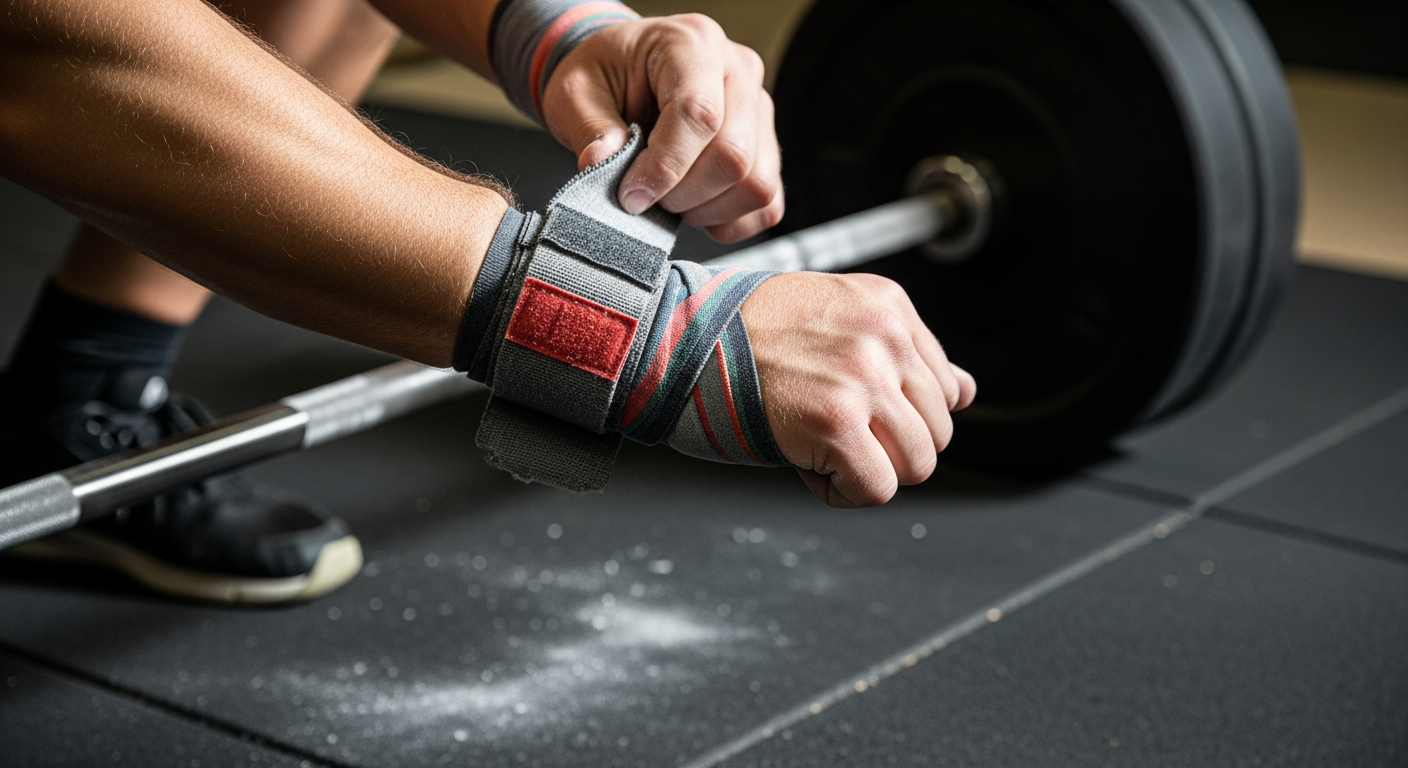
Best Wrist Wraps for CrossFit 2026: Protect Your Lifts Without Losing Wrist Mobility
Wrist pain is the silent CrossFit career-ender. The right wrist wraps keep you training through heavy pressing cycles and overhead work without sacrificing mobility. Here's our 2026 guide.
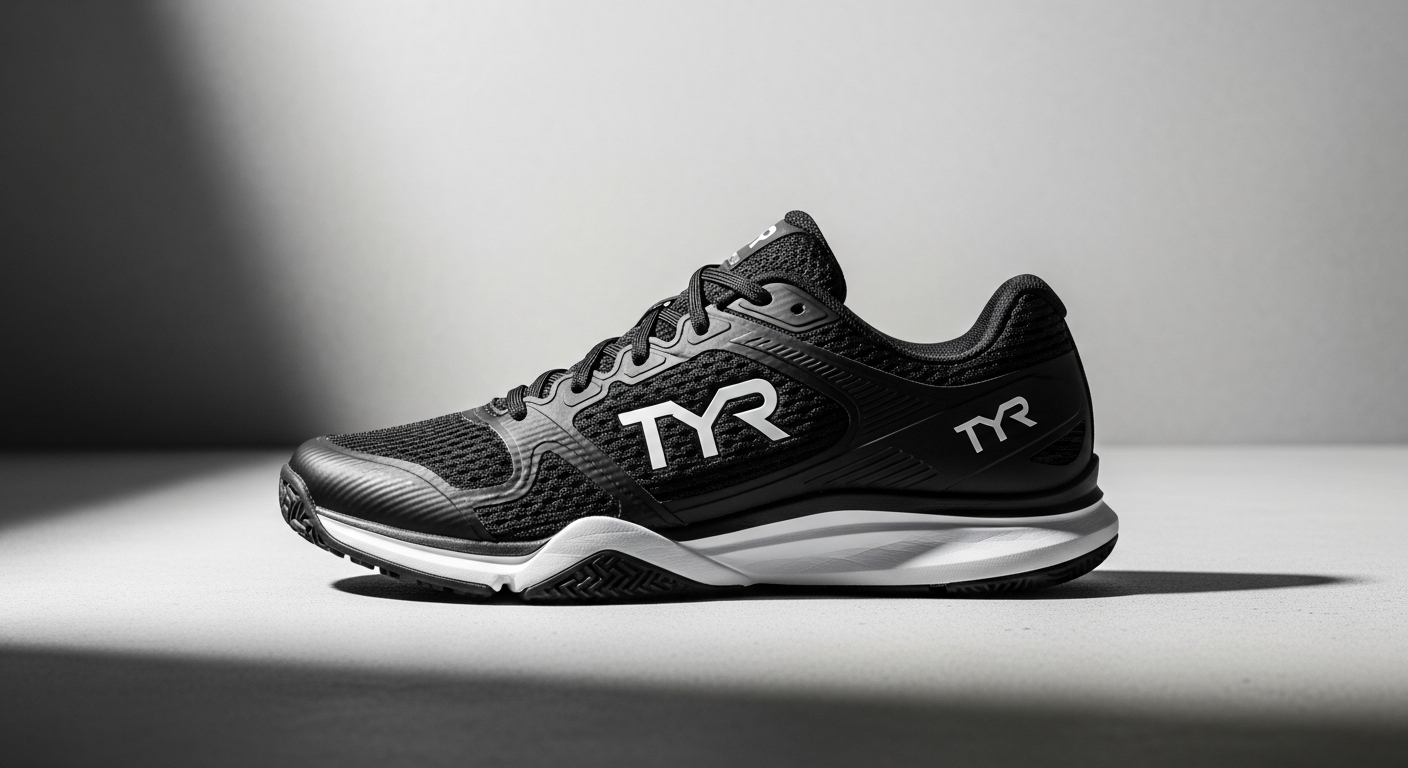
TYR CXT-3 Trainer Review: The Underdog CrossFit Shoe That Deserves Your Attention
TYR is known for swimwear. Their CXT-3 training shoe is trying to change that. After 6 weeks of daily CrossFit use, here's whether it's worth taking the leap on an unknown brand.