
The Science of Pacing Hyrox: Why Most Athletes Go Out Too Hot
The data is clear. Most amateur Hyrox athletes blow up in the back half. Here is how to fix it.
Why Pacing Is the Difference Between a Good and a Great HYROX Time
HYROX is not a sprint. It is not a marathon. It is eight rounds of controlled suffering, connected by eight kilometres of running, and the athletes who win are not necessarily the fastest or the strongest — they are the ones who understand pacing.
The science of pacing in HYROX is both straightforward and deeply nuanced. At its core, the question is simple: how do you distribute your effort across 60-90 minutes of mixed-modal competition to produce the fastest possible total time? The answer involves physiology, psychology, race strategy, and a willingness to resist the adrenaline-fueled urge to go out too fast.
Every HYROX athlete — from first-timers chasing a sub-90:00 finish to elite racers pushing for sub-60:00 — can improve their time significantly through better pacing. In a sport where the difference between a podium finish and mid-pack obscurity is often measured in minutes, pacing is the lowest-hanging fruit available.
"The fastest HYROX racers don't look fast. They look controlled. That's the difference." — A common observation at HYROX events worldwide
The Energy Systems at Play
Understanding HYROX pacing requires a basic grasp of the energy systems that fuel human performance:
Aerobic system — Your body's primary fuel source for efforts lasting longer than 2-3 minutes. This is the engine that powers your runs and sustains your effort through the workout stations. In HYROX, approximately 85-90% of your total energy comes from aerobic metabolism.
Anaerobic glycolytic system — Kicks in during higher-intensity efforts lasting 30 seconds to 2 minutes. This system fuels your bursts on the ski erg, sled pushes, and other stations where intensity spikes above your aerobic threshold.
Phosphocreatine system — Powers maximal efforts lasting under 10 seconds. Less relevant in HYROX but comes into play during heavy sled pushes and the initial acceleration on each running segment.
The key insight is that HYROX is overwhelmingly aerobic. Athletes who treat it as a series of anaerobic sprints will pay an enormous metabolic cost that compounds across the race. The lactate accumulated during an overly aggressive station effort does not disappear — it impairs your running, which impairs your next station, which impairs your next run, in a cascading cycle of deteriorating performance.
The Cost of Going Out Too Fast
The data on HYROX pacing is unambiguous: negative splitting (getting faster as the race progresses) or even splitting (maintaining consistent effort throughout) produces faster total times than positive splitting (starting fast and fading).
Analysis of elite HYROX race data shows that athletes who run their first kilometre more than 10% faster than their average running pace typically lose 3-5 minutes over the course of the race compared to evenly-paced athletes with similar fitness levels. The cost is not linear — it is exponential. Going 15% too fast on the first run can cost 7-10 minutes by the finish.
Station-by-Station Pacing Strategy
Each of HYROX's eight workout stations presents unique pacing challenges. The optimal strategy varies based on the station's characteristics, your individual strengths, and where it falls in the race sequence.
Ski Erg (1,000m)
The ski erg is the first station, and it sets the tone for your entire race. The temptation to attack it aggressively — fuelled by adrenaline and a fresh body — is enormous and must be resisted.
Pacing guidelines:
- ▸Target a pace that is 80-85% of your max effort
- ▸For elite men: aim for 3:30-4:00 (1:45-2:00 per 500m)
- ▸For elite women: aim for 4:00-4:30 (2:00-2:15 per 500m)
- ▸For recreational athletes: aim for a pace you could sustain for 3,000m, not 1,000m
- ▸Breathing pattern: Establish a rhythmic breathing pattern within the first 100m and maintain it
The ski erg rewards consistent stroke rate over maximal pull force. Athletes who maintain 28-32 strokes per minute with moderate power output will outperform those who pull maximally at 22-24 strokes per minute.
"Win the ski erg by losing it. Go slower than you want to. Your future self will thank you at station six."
Sled Push (50m)
The sled push is the most strength-dependent station in HYROX and the one where pacing strategy diverges most between athlete types.
For strong athletes (those who can push the prescribed weight comfortably):
- ▸Maintain a steady walking pace with continuous contact
- ▸Three rest stops maximum for the 50m distance
- ▸Total time target: 2:00-3:00 for elite, 3:00-5:00 for recreational
For lighter/less strong athletes:
- ▸Break the 50m into 5-10m segments with brief rest
- ▸Focus on leg drive from a low hip position
- ▸Accept that this station will take longer and manage heart rate accordingly
- ▸Total time target: 4:00-6:00 or more depending on body weight relative to sled weight
Sled Pull (50m)
The sled pull is where many athletes waste time and energy through poor technique rather than poor pacing.
Key pacing principles:
- ▸Hand-over-hand technique is faster than walking backward for most athletes
- ▸Establish a rhythm and maintain it — each pull should cover the same distance
- ▸Grip endurance is the limiter; pace to avoid forearm pump that forces extended rest
- ▸Do not rush the transition from pulling to unhooking the sled
Burpee Broad Jumps (80m)
This station is the most metabolically costly in the race and the one where pacing discipline pays the highest dividends.
Pacing strategy:
- ▸Maintain a consistent jump distance rather than maximising each jump
- ▸Target 1.2-1.5m per jump for men, 1.0-1.3m for women
- ▸The burpee portion should be controlled, not explosive — save your hip flexors
- ▸Break the 80m into four mental segments of 20m each
- ▸Heart rate management is critical — if you spike above 90% max HR, slow down
Rowing (1,000m)
The rower is a familiar tool for CrossFitters, and the pacing principles are well-established.
Target splits:
- ▸Elite men: 1:40-1:50 per 500m (total 3:20-3:40)
- ▸Elite women: 1:55-2:05 per 500m (total 3:50-4:10)
- ▸Recreational: 2:00-2:15 per 500m (total 4:00-4:30)
Strategy: Start at your target pace and hold it. The rower punishes aggressive starts more than almost any other piece of equipment because the flywheel physics amplify the metabolic cost of high-power output.
Farmers Carry (200m)
Pacing the farmers carry is primarily about grip management and breathing.
- ▸Carry without stopping if possible — each set-down and pick-up costs 5-10 seconds and significant grip fatigue
- ▸Walk at a pace that allows nasal breathing — if you are gasping, you are too fast
- ▸Maintain an upright posture to keep the load centred and reduce lower back fatigue
- ▸If you must rest, do so before your grip fails completely, not after
Sandbag Lunges (100m)
The sandbag lunges are where the race is often won or lost. By this point, athletes are fatigued, and the temptation to rush through the lunges leads to short steps, incomplete reps, and wasted energy.
Pacing principles:
- ▸Full stride length on every rep — short steps feel easier but cover less distance and take more total reps
- ▸Maintain a 2-second cadence per lunge: step, sink, stand
- ▸Breathe on a 2:1 pattern (two breaths per lunge)
- ▸If you need to rest, rest standing with the bag on your shoulders, not on the ground
Wall Balls (100 reps)
The final station. By this point, your legs are destroyed, your lungs are burning, and the wall ball target looks like it is getting higher with each rep.
Pacing strategy:
- ▸Break the 100 reps into planned sets: 25-25-25-25 or 20-20-20-20-20
- ▸Rest periods should be 5-10 seconds maximum — just enough to shake out the legs
- ▸Breathing rhythm is everything: inhale on the catch, exhale on the throw
- ▸Maintain squat depth — shallow reps that get no-repped cost more than an extra second of rest
"Wall balls at the end of a HYROX race are not about your legs or your shoulders. They're about your character. Pace them, and finish strong."
The Transitions: Where Minutes Are Made
The often-overlooked element of HYROX pacing is the transition — the time between finishing a workout station and starting the next running segment (or vice versa). Elite athletes treat transitions with the same precision as the stations themselves.
Transition Time Targets
- ▸Station to run: Under 10 seconds — grab water if needed, start running immediately
- ▸Run to station: Under 15 seconds — get to the equipment, set up, begin
- ▸Total transition time for the race: Elite athletes target under 3 minutes total; recreational athletes often lose 5-8 minutes in transitions alone
The Mental Transition
Beyond the physical time cost, transitions are where athletes make critical pacing decisions. The 30 seconds before starting a new station are when your body screams at you to rest and your brain must override that signal with the pre-planned pacing strategy.
The best HYROX athletes describe this as autopilot — the pacing decisions were made in training, not on race day. By the time you are standing in front of the ski erg or reaching for the sled, the pace is already set. You are just executing.
Building Your Personal Pacing Plan
Every HYROX racer should develop a personalised pacing plan based on their fitness data, race goals, and individual strengths and weaknesses.
Step 1: Establish Your Baselines
Test each station independently in training and record your times at different effort levels — 70%, 80%, and 90% of maximum. Test your running at the same effort levels for 1 km repeats.
Step 2: Set Your Race Day Targets
Your race day target for each station should be approximately 80-85% of your maximum effort. This leaves enough in the tank to maintain performance across all eight stations and eight runs.
Step 3: Practice the Plan
Run full or partial HYROX simulations in training using your pacing targets. The goal is to make the pacing automatic — so deeply ingrained that you default to it even when race-day adrenaline pushes you to go faster.
Step 4: Adjust Based on Race Conditions
On race day, adjust your plan based on conditions: altitude, temperature, humidity, the specific venue's sled surface, and how you feel during warm-up. A pacing plan is a guide, not a straitjacket.
The difference between a good HYROX time and a great one is rarely fitness. It is almost always pacing. Train your body in the gym. Train your brain to follow the plan.
More from BoxJunkies

Best Lifting Belt for CrossFit 2026: Support That Moves With You
A good lifting belt should become invisible in the middle of a heavy squat or clean. We tested the top CrossFit-compatible lifting belts to find the ones that actually disappear when you need them to.

Best Wrist Wraps for CrossFit 2026: Protect Your Lifts Without Losing Wrist Mobility
Wrist pain is the silent CrossFit career-ender. The right wrist wraps keep you training through heavy pressing cycles and overhead work without sacrificing mobility. Here's our 2026 guide.
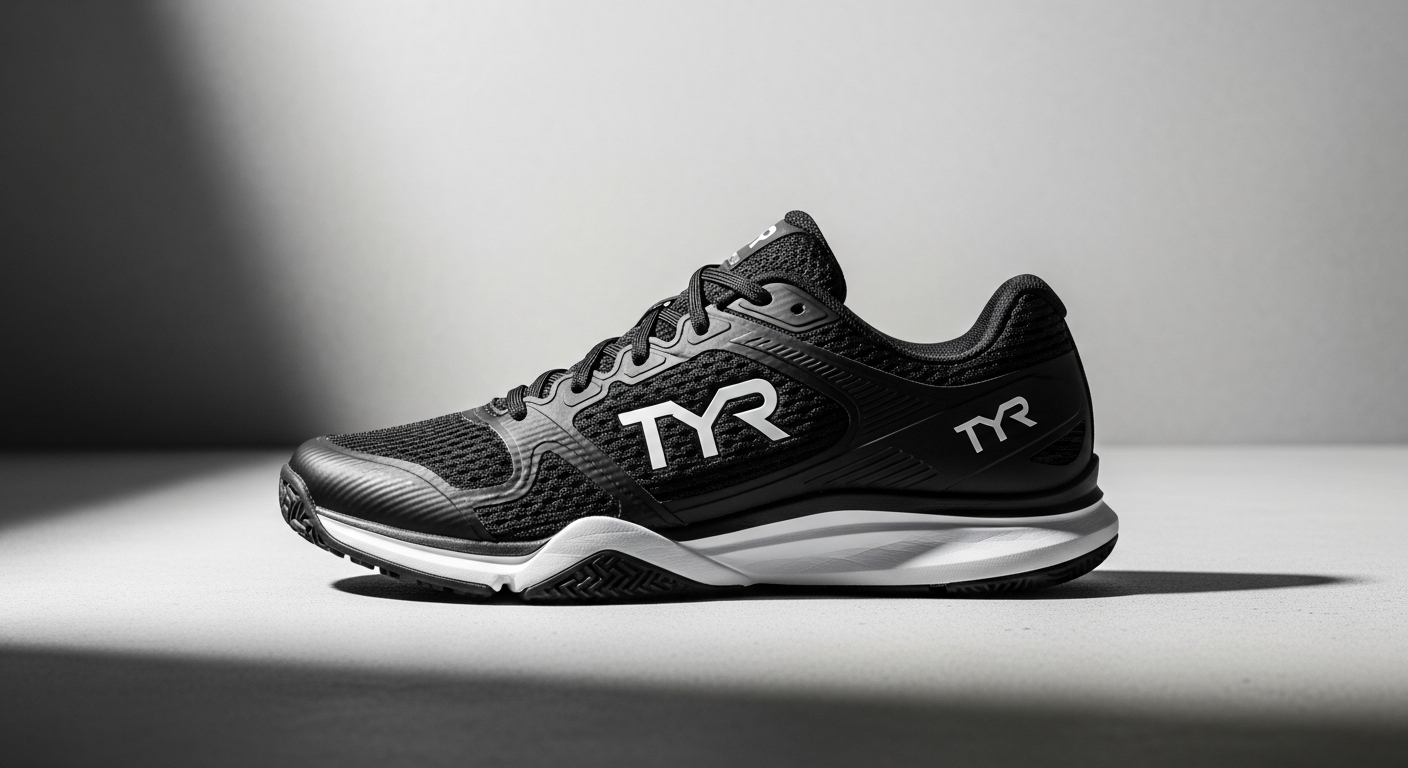
TYR CXT-3 Trainer Review: The Underdog CrossFit Shoe That Deserves Your Attention
TYR is known for swimwear. Their CXT-3 training shoe is trying to change that. After 6 weeks of daily CrossFit use, here's whether it's worth taking the leap on an unknown brand.