
How to Build Your First Hyrox Training Block
No fluff. A practical 8-week framework for your first Hyrox race, built around what actually moves the needle.
Your First HYROX Race Starts Here
You have signed up for a HYROX race. Maybe it was peer pressure. Maybe it was Instagram. Maybe you watched someone cross a finish line looking simultaneously triumphant and broken, and you thought: I want that. Whatever the reason, you are committed — and now you need a training plan.
Building your first HYROX training block is not complicated, but it does require structure. The race demands a specific combination of running endurance, functional strength, and station-specific skill that casual gym training alone will not prepare you for. A well-designed 8-12 week training block will transform you from "hoping to finish" to "racing to compete."
This guide will walk you through the principles, the programming, and the practical details of building a HYROX training block from scratch — even if you have never done a structured training programme before.
"HYROX is the easiest race to finish and the hardest race to finish well. Your training block determines which experience you'll have."
What HYROX Actually Demands
Before you build a training plan, you need to understand what you are training for. A HYROX race consists of:
- ▸8 x 1 km runs between workout stations (total: 8 km of running)
- ▸1,000m Ski Erg
- ▸50m Sled Push (152 kg men / 102 kg women)
- ▸50m Sled Pull (103 kg men / 78 kg women)
- ▸80m Burpee Broad Jumps
- ▸1,000m Row
- ▸200m Farmers Carry (2 x 24 kg men / 2 x 16 kg women)
- ▸100m Sandbag Lunges (20 kg men / 10 kg women)
- ▸100 Wall Balls (9 kg to 3m men / 6 kg to 2.7m women)
The total race typically takes 60-90 minutes for competitive athletes and 75-120 minutes for recreational participants. The demand profile is approximately 60% cardiovascular endurance, 25% muscular endurance, and 15% strength and skill.
Assessing Your Starting Point
Before writing a single training session, assess where you are across the key HYROX fitness domains:
- ▸Running: Can you run 5 km comfortably? What is your 1 km pace?
- ▸Rowing/Ski Erg: Can you sustain 2:00/500m on the rower for 1,000m? What about the ski erg?
- ▸Sled Work: Have you pushed a sled at race weight? How did it feel?
- ▸Wall Balls: Can you do 50 unbroken wall balls? 30? 20?
- ▸Lunges: Can you lunge 50m with a sandbag without stopping?
- ▸Grip Endurance: Can you farmers carry for 100m without setting down?
Be honest. Your training block should address your actual weaknesses, not reinforce your existing strengths.
The 8-Week Training Block: Structure and Principles
An 8-week training block is the minimum effective dose for meaningful HYROX preparation. Longer blocks (12-16 weeks) allow for more gradual progression and are recommended for first-time racers, but 8 weeks will get you race-ready if you already have a base level of fitness.
Weekly Structure
The training week follows a simple template that balances the three pillars of HYROX performance:
Monday: Running + Upper Body Station Work Tuesday: Lower Body Strength + Sled Work Wednesday: Active Recovery or Easy Run Thursday: Running Intervals + Mixed Station Practice Friday: Full-Body Strength + Grip Work Saturday: Long Run or HYROX Simulation Sunday: Complete Rest
This structure provides 5 training days and 2 recovery days per week — a volume that is sustainable for most athletes while providing enough stimulus for meaningful improvement.
Progressive Overload Principles
The training block follows a 3:1 loading pattern — three weeks of increasing volume and intensity followed by one deload week. This pattern allows for consistent adaptation while managing fatigue:
- ▸Weeks 1-3: Build volume — increase total running distance, station reps, and session duration
- ▸Week 4: Deload — reduce volume by 30-40%, maintain intensity
- ▸Weeks 5-7: Build intensity — increase pace, load, and station-specific demands
- ▸Week 8: Race week taper — reduce volume significantly, maintain short, sharp efforts
"The deload week is not a week off. It is the week where your body actually adapts to the training you've been doing. Skip it, and you'll arrive at race day tired instead of ready."
Pillar 1: Building the Running Engine
Running accounts for 8 km of the HYROX race and consumes roughly 40-50% of total race time. If your running is weak, your HYROX time will suffer regardless of how strong you are on the stations.
Running Session Types
Your training block should include three types of running sessions:
Easy Runs (Zone 2)
- ▸Duration: 30-45 minutes
- ▸Intensity: Conversational pace — you should be able to talk in full sentences
- ▸Purpose: Build aerobic base, improve fat oxidation, enhance recovery
- ▸Frequency: 1-2 per week
Interval Runs
- ▸Structure: 6-8 x 1 km at target race pace with 90-second rest between intervals
- ▸Intensity: Uncomfortable but sustainable — you should be able to complete all intervals at the same pace
- ▸Purpose: Develop race-specific running fitness and pacing discipline
- ▸Frequency: 1 per week
Long Runs
- ▸Duration: 45-75 minutes
- ▸Intensity: Easy to moderate — slightly faster than Zone 2 but never breathless
- ▸Purpose: Build endurance capacity for the total race duration
- ▸Frequency: 1 per week (Saturday)
Running Progression
Over the 8-week block, running volume and intensity should progress as follows:
- ▸Week 1: Total weekly running volume: 15-20 km
- ▸Week 3: Total weekly running volume: 22-28 km
- ▸Week 4 (deload): Total weekly running volume: 12-15 km
- ▸Week 7: Total weekly running volume: 25-32 km
- ▸Week 8 (taper): Total weekly running volume: 10-12 km
Running-to-Station Transitions
HYROX-specific running training must include transition practice — the ability to run at a controlled pace, stop, and immediately perform work on a station. At least once per week, your running session should include a "run-to-work" element:
Example: Run 1 km at race pace → immediately perform 20 wall balls → run 1 km → immediately perform 50m lunges → run 1 km → immediately row 500m
This trains the physiological and psychological transition between running and station work, which is fundamentally different from running alone.
Pillar 2: Station-Specific Training
Each HYROX station has unique demands, and your training block should include dedicated practice for each one.
Ski Erg and Row
These machines test cardiovascular endurance and pacing discipline. Training should focus on:
- ▸Pacing practice: 3-4 x 1,000m at target race pace with 2-minute rest
- ▸Technique work: Focus on efficient stroke mechanics rather than raw power
- ▸Endurance sets: 2-3 x 2,000m at moderate pace to build capacity beyond race distance
- ▸Frequency: 2 sessions per week (one ski erg, one row)
Sled Push and Pull
Sled work is the most strength-dependent element of HYROX and the station where body weight has the greatest impact on performance.
- ▸Progressive loading: Start at 70% of race weight and build to 100% by Week 5
- ▸Technique practice: Low hip position for push, hand-over-hand for pull
- ▸Conditioning sets: 4-6 x 25m at race weight with 90-second rest
- ▸Frequency: 1-2 sessions per week
If you don't have access to a sled, substitute heavy leg press, prowler pushes, or even car pushes in a parking lot. The movement pattern matters more than the exact equipment.
Burpee Broad Jumps
This station is the most metabolically demanding and the one most likely to derail your race if you are underprepared.
- ▸Volume building: Start with 3 x 20m and progress to 4 x 20m by Week 6
- ▸Pacing practice: Maintain a consistent jump distance rather than maximising each jump
- ▸Heart rate training: Practice burpee broad jumps at the heart rate you'll experience at that point in the race (mid-to-high)
- ▸Frequency: 1-2 sessions per week
Farmers Carry and Sandbag Lunges
These stations test grip endurance and muscular stamina under fatigue.
Farmers Carry:
- ▸Practice at race weight for 4 x 50m with minimal rest
- ▸Build to 2 x 100m unbroken by Week 6
- ▸Include grip-specific accessory work: dead hangs, towel pull-ups, fat grip holds
Sandbag Lunges:
- ▸Start with 4 x 25m at race weight
- ▸Progress to 2 x 50m by Week 6
- ▸Focus on stride length and rhythmic breathing
Wall Balls
The final station requires muscular endurance, pacing, and mental toughness.
- ▸Volume building: Week 1: 3 x 25 reps → Week 7: 2 x 50 reps
- ▸Under fatigue: Practice wall balls after a running or rowing effort to simulate race conditions
- ▸Pacing sets: 100 reps for time with planned breaks (e.g., 25-25-25-25)
- ▸Frequency: 2 sessions per week
Pillar 3: Strength and Conditioning
HYROX does not require maximal strength, but it does require a base level of strength that allows you to handle the prescribed loads without excessive fatigue.
Key Strength Movements
Your strength sessions should focus on movements that directly transfer to HYROX performance:
- ▸Back squat: Builds the leg strength needed for sled work, lunges, and wall balls
- ▸Deadlift: Develops posterior chain strength for sled pulls and farmers carries
- ▸Overhead press: Supports wall ball performance and ski erg power
- ▸Pull-ups/rows: Builds the pulling strength for sled pulls and ski erg
- ▸Lunges: Direct transfer to the sandbag lunge station
Strength Session Template
Lower Body (Tuesday):
- ▸Back Squat: 4 x 6-8 at moderate weight
- ▸Romanian Deadlift: 3 x 10-12
- ▸Walking Lunges: 3 x 20 steps with load
- ▸Sled Push/Pull: 4-6 x 25m
Full Body (Friday):
- ▸Deadlift: 4 x 5 at moderate-heavy weight
- ▸Overhead Press: 3 x 8-10
- ▸Pull-ups: 3 x max reps
- ▸Farmers Carry: 3 x 50m
- ▸Core Work: 3 x 15 GHD sit-ups or hanging leg raises
"Strength training for HYROX is not about how much you can lift. It's about how much you can lift after running 6 km and completing five stations. Train accordingly."
Putting It All Together: Sample Week
Here is a sample training week from Week 5 of the block — the peak intensity phase:
Monday: 6 x 1 km run at race pace (90s rest) → 3 x 500m ski erg at race pace Tuesday: Back squat 4x6, RDL 3x10, sled push 6x25m at race weight Wednesday: Easy 30-min run or bike, mobility work Thursday: Run 3 km → 20 burpee broad jumps → run 2 km → 50 wall balls → run 1 km → row 1,000m Friday: Deadlift 4x5, press 3x8, pull-ups 3x max, farmers carry 3x50m, core Saturday: HYROX simulation — 4 stations with 1 km runs between each Sunday: Rest
This sample balances volume, intensity, and specificity while providing adequate recovery. Adjust based on your individual recovery capacity and schedule constraints.
The most important thing about your first HYROX training block is that it exists. A structured, progressive plan — even an imperfect one — will outperform random gym training every single time. Build the block. Follow the plan. Trust the process. And on race day, you will be ready.
More from BoxJunkies

Best Lifting Belt for CrossFit 2026: Support That Moves With You
A good lifting belt should become invisible in the middle of a heavy squat or clean. We tested the top CrossFit-compatible lifting belts to find the ones that actually disappear when you need them to.

Best Wrist Wraps for CrossFit 2026: Protect Your Lifts Without Losing Wrist Mobility
Wrist pain is the silent CrossFit career-ender. The right wrist wraps keep you training through heavy pressing cycles and overhead work without sacrificing mobility. Here's our 2026 guide.
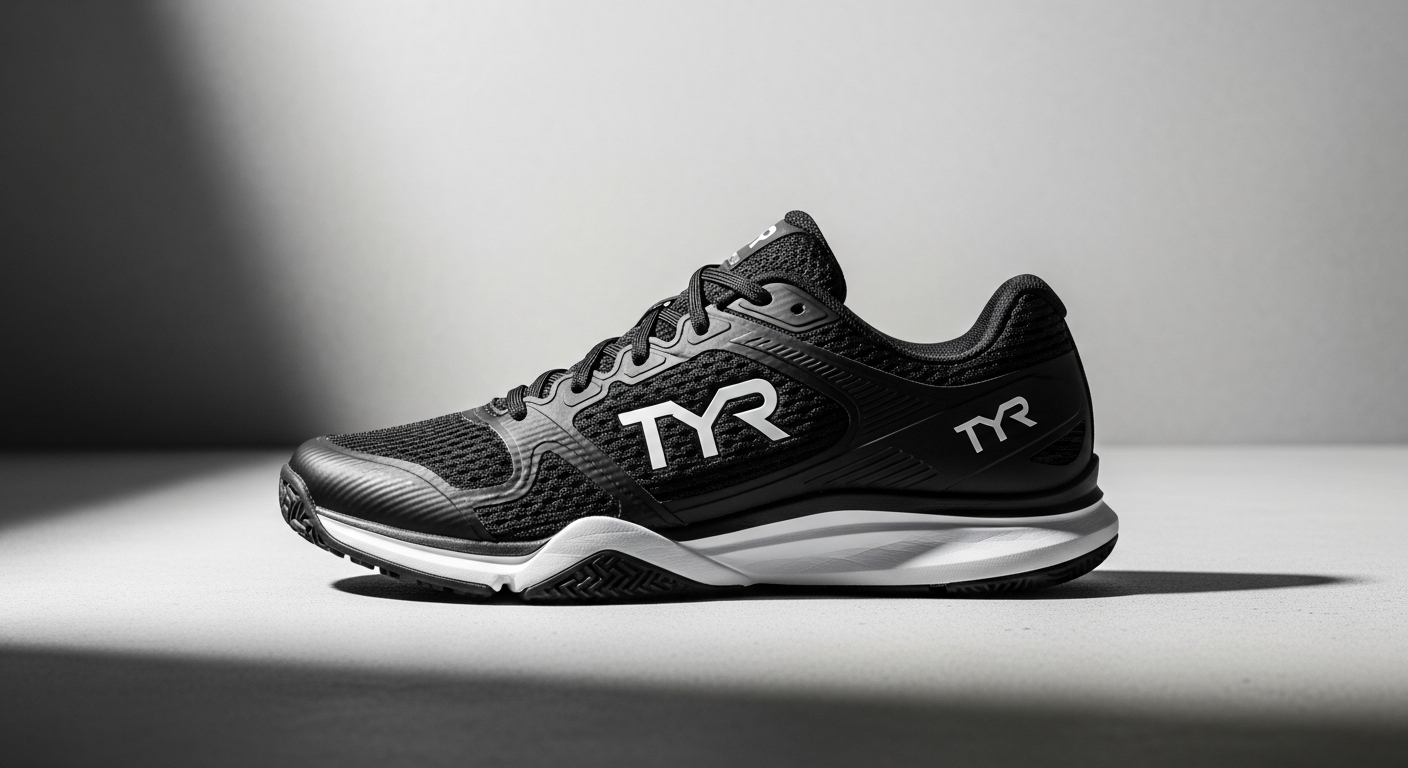
TYR CXT-3 Trainer Review: The Underdog CrossFit Shoe That Deserves Your Attention
TYR is known for swimwear. Their CXT-3 training shoe is trying to change that. After 6 weeks of daily CrossFit use, here's whether it's worth taking the leap on an unknown brand.