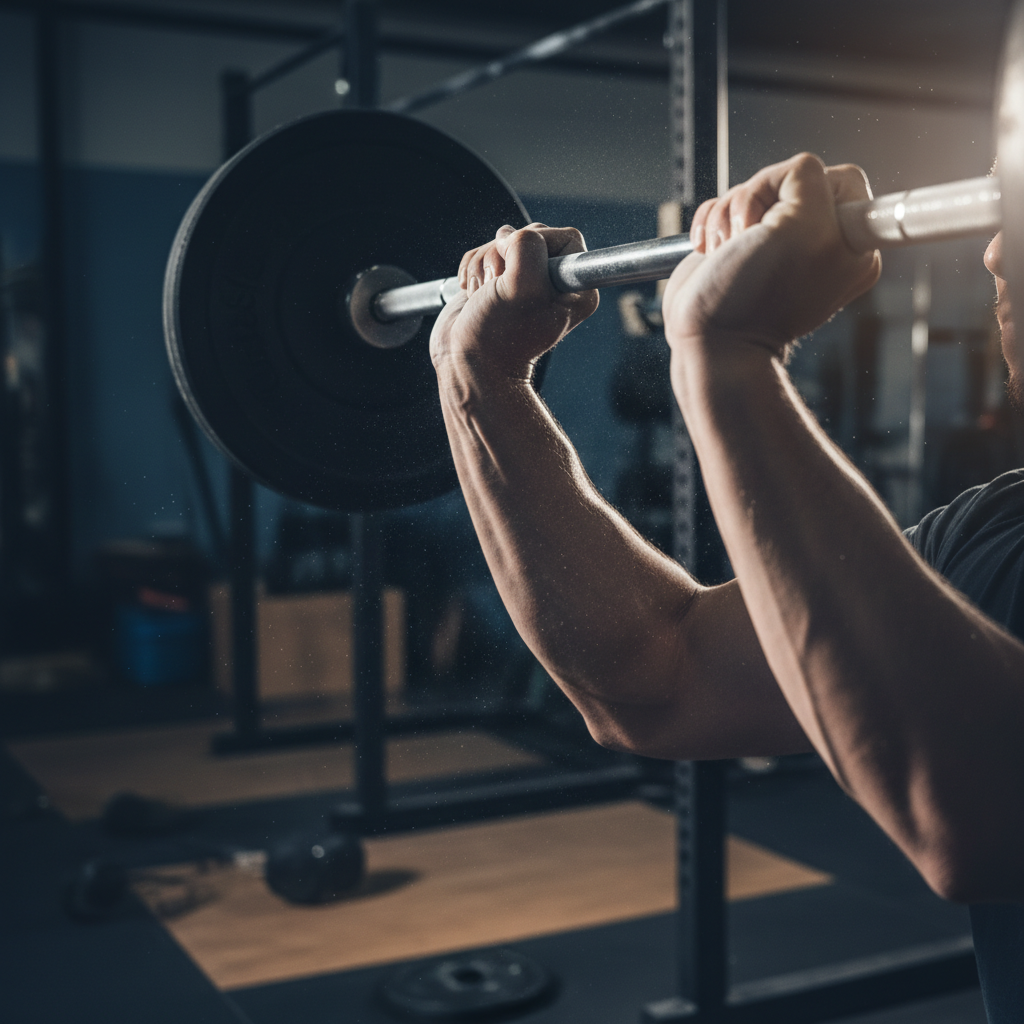
5 CrossFit Movements That Will Always Expose Your Weaknesses
Every athlete has a tell. These five movements are the ones that find it every time.
The Movements That Tell the Truth
CrossFit is built on the idea that fitness is measurable, observable, and repeatable. But not all measurements are created equal. Some workouts tell you how fit you are. Others tell you where you are broken.
The five movements in this guide belong to the second category. They are the movements that expose the gaps in your training — the mobility restrictions you have been ignoring, the strength imbalances you have been compensating for, and the skill deficits that your regular programming lets you hide.
These are not the movements that make you look good on Instagram. They are the movements that make you honest.
"Everybody has a weakness. The question is whether you know what yours is before competition exposes it." — Every experienced CrossFit coach
Why These Five?
The movements selected for this guide share three characteristics:
- ▸They are compound — requiring coordination across multiple joints and muscle groups
- ▸They are revealing — poor performance is almost always caused by a specific, identifiable limitation
- ▸They are transferable — improving at these movements produces carryover to dozens of other CrossFit skills
If you can perform all five of these movements proficiently, your functional fitness foundation is solid. If you cannot, each weakness points to a specific area of development that, when addressed, will unlock improvement across your entire training.
1. The Overhead Squat: The Full-Body X-Ray
The overhead squat is the single most revealing movement in CrossFit. It is a full-body assessment disguised as an exercise. Every mobility restriction, stability deficit, and strength imbalance you carry is visible in the overhead squat — often simultaneously.
What It Exposes
Ankle mobility: Athletes with restricted ankle dorsiflexion cannot maintain an upright torso as they descend into the squat. The heels rise, the chest drops, and the barbell drifts forward. If you cannot keep your heels flat at the bottom of an overhead squat, your ankles are limiting your entire squat pattern.
Hip mobility: Tight hip flexors and restricted hip external rotation prevent athletes from reaching full depth with a neutral spine. The result is the characteristic "butt wink" — a posterior pelvic tilt at the bottom of the squat that loads the lumbar spine and destabilises the overhead position.
Thoracic extension: The ability to extend the upper back and create a stable shelf for the barbell is essential. Athletes with poor thoracic mobility — often the result of desk-bound lifestyles — cannot get the bar into the correct overhead position without excessive lumbar extension (arching the lower back to compensate).
Shoulder stability and mobility: The overhead squat demands both full shoulder flexion (arms behind the ears) and active stabilisation of the barbell throughout the range of motion. Athletes with restricted shoulder mobility or weak rotator cuff muscles will lose the bar forward or feel unstable at the bottom.
"If your overhead squat is ugly, your snatch will be worse. Fix the squat first." — Weightlifting coaching wisdom that applies directly to CrossFit
How to Test Yourself
Perform 5 overhead squats with an empty barbell, pausing for 3 seconds at the bottom of each rep. Have someone film you from the side and from behind. Look for:
- ▸Heels rising off the floor
- ▸Knees caving inward
- ▸Chest dropping forward
- ▸Bar drifting forward of the midfoot
- ▸Excessive lower back arch
- ▸Loss of bar stability at the bottom
How to Fix It
The overhead squat is best improved through targeted mobility work and progressive loading:
- ▸Ankle mobility: Banded ankle distractions, wall-facing ankle stretches, 3 x 30 seconds daily
- ▸Hip mobility: 90/90 hip stretches, pigeon pose, deep squat holds — 5 minutes daily
- ▸Thoracic extension: Foam roller extensions, cat-cow stretches, 2 minutes pre-session
- ▸Shoulder mobility: PVC pass-throughs, hang from a bar for 30 seconds, overhead band distractions
- ▸Loading progression: Start with a PVC pipe, progress to an empty bar, add weight only when positions are solid
2. The Strict Handstand Push-Up: Upper Body Truth Serum
The strict handstand push-up separates athletes who have genuine pressing strength from those who have learned to kip their way through workouts. It is the upper-body movement that CrossFitters most commonly avoid — and the one that reveals the most about their pressing capacity and shoulder health.
What It Exposes
Pressing strength relative to body weight: The strict HSPU requires pressing approximately 70-80% of your bodyweight through a full range of motion. Athletes who can bench press impressive numbers but cannot perform a strict HSPU have a strength-to-weight ratio problem.
Shoulder stability in end range: The bottom of the HSPU places the shoulders in a position of maximum flexion under load — a position that many athletes never train. Weakness or instability in this position is a red flag for shoulder health and a predictor of injury under fatigue.
Midline control: Maintaining a rigid body position while inverted requires significant core strength and body awareness. Athletes who snake, arch, or lose tension during the HSPU reveal a midline deficit that affects every gymnastics movement in CrossFit.
Neck and upper trap strength: An often-overlooked component, the ability to support the head and cervical spine while inverted under load is a limiting factor for many athletes.
How to Test Yourself
Attempt 3 strict handstand push-ups to a standard deficit (AbMat or equivalent) from a wall-supported position. Assess:
- ▸Can you lower with control through the full range?
- ▸Can you press back up without kipping, arching, or losing midline?
- ▸Do your elbows track over your hands, or do they flare dramatically?
- ▸Is there any pain or pinching in the shoulders at the bottom?
How to Fix It
- ▸Pike push-ups with feet elevated: 4 x 6-8 reps, progressively increasing elevation
- ▸Eccentric (negative) HSPUs: Lower slowly (5-second descent) for 3 x 3-5 reps
- ▸Seated dumbbell press: 4 x 8-10 to build raw pressing strength
- ▸Wall-facing handstand holds: 4 x 30-45 seconds for shoulder stability and comfort inverted
- ▸Strict press: Build your barbell strict press to at least 70% of bodyweight
"If you can't do a strict HSPU, you don't have a handstand push-up. You have a kipping trick that will fail you when it matters."
3. The Single-Leg Pistol Squat: The Imbalance Detector
The pistol squat is CrossFit's most honest test of unilateral lower-body function. While bilateral squats allow your strong leg to compensate for your weak one, the pistol exposes every asymmetry.
What It Exposes
Unilateral strength imbalances: Most athletes have a significant strength difference between their left and right legs. The pistol reveals this imbalance immediately — one side feels strong and controlled; the other feels wobbly and weak.
Ankle mobility (again): The pistol squat requires even more ankle dorsiflexion than the overhead squat because the entire load is on one leg. Athletes with restricted ankles cannot reach full depth without falling backward.
Hip and knee stability: The single-leg stance challenges stabiliser muscles — particularly the gluteus medius and the muscles around the knee — that are under-trained in bilateral squatting. Knee collapse (valgus) during the pistol is both common and concerning.
Balance and proprioception: The pistol is a balance challenge as much as a strength challenge. Athletes who rely on external stability (racks, bands, boxes) for their squatting rarely develop the proprioceptive awareness that the pistol demands.
How to Test Yourself
Perform 3 pistol squats on each leg with bodyweight only. Note:
- ▸Can you reach full depth on both sides?
- ▸Is there a noticeable difference in control between sides?
- ▸Does your knee cave inward on either side?
- ▸Can you stand up without excessive forward lean or loss of balance?
How to Fix It
- ▸Box pistols: Lower to a box at progressively lower heights — 4 x 5 each leg
- ▸Banded pistols: Use a band for assistance and reduce assistance over time
- ▸Single-leg Romanian deadlifts: 3 x 8 each leg for hip and hamstring stability
- ▸Cossack squats: 3 x 6 each side for lateral hip and ankle mobility
- ▸Balance work: Single-leg stands on unstable surfaces — 3 x 30 seconds each leg
4. The Muscle-Up: The Movement That Cannot Be Faked
The bar or ring muscle-up is CrossFit's gateway skill — the movement that separates "good at CrossFit" from "competitive at CrossFit." It requires a specific combination of pulling strength, pressing strength, coordination, and timing that cannot be muscled through with raw fitness.
What It Exposes
Pull-to-press transition strength: The muscle-up's unique demand is the transition — the moment when the athlete shifts from pulling their body upward to pressing their body above the rings or bar. This transition requires strength in a position that no other movement trains directly.
Lat engagement and scapular control: Athletes who cannot activate their lats effectively — pulling the rings or bar to the hips rather than the chest — will never achieve a fluid muscle-up. The movement exposes poor scapular mechanics that may be hidden during regular pull-ups.
Kipping efficiency: For the kipping muscle-up, the hip drive must be precisely timed and directed. Athletes who have learned a large, uncontrolled kip for pull-ups often find that the same kip does not transfer to muscle-ups, revealing a fundamental efficiency problem.
Core-to-extremity power transfer: The muscle-up requires the athlete to generate power from the hips and transfer it through a rigid midline to the upper body. Any leak in this chain — a soft core, disconnected shoulders — results in a failed attempt.
"The muscle-up doesn't care how strong you are. It cares how well you move." — A humbling truth for many strong athletes
How to Test Yourself
Before attempting muscle-ups, confirm these prerequisites:
- ▸Strict pull-ups: Can you do 8-10 unbroken?
- ▸Strict ring dips: Can you do 8-10 with full range of motion?
- ▸Hip-to-ring pull: Can you pull the rings (or bar) to your hips from a hang?
- ▸Transition drill: From a low ring position, can you perform the catch and press?
How to Fix It
- ▸Strict pulling strength: Weighted pull-ups — 5 x 3 at progressively heavier loads
- ▸Transition drills: Band-assisted transitions focusing on the turnover — 5 x 3 reps
- ▸Ring dip strength: Weighted ring dips — 4 x 5 for pressing capacity
- ▸Kip timing: Practice small, controlled kips on the bar or rings without attempting the muscle-up
- ▸Hip-to-bar pulls: 4 x 5 from a dead hang, pulling the bar to the hip crease
5. The Double-Under: The Skill That Humbles Everyone
The double-under is deceptively simple: jump rope, but the rope passes under your feet twice per jump. In practice, it is the movement that reduces grown adults to frustrated, whip-marked puddles of humiliation on the gym floor.
What It Exposes
Coordination and timing: The double-under requires precise synchronisation between jump height, wrist speed, and rope length. Athletes who have coasted on raw fitness without developing coordination will struggle for weeks or months to achieve proficiency.
Calf endurance and elasticity: The repeated bouncing motion of double-unders taxes the calves in a way that no other CrossFit movement does. Athletes with tight, weak calves will gas out long before their cardiovascular system gives up.
Breathing under skill stress: The double-under demands that athletes maintain a relaxed breathing pattern while performing a high-coordination skill under fatigue. The tendency to hold breath, tense up, and lose rhythm is the primary failure mode.
Psychological composure: Perhaps more than any other movement, double-unders are affected by frustration. Athletes who trip become tense. Tension disrupts timing. Disrupted timing causes more trips. The spiral is predictable and brutal.
How to Test Yourself
Attempt 50 unbroken double-unders. If you can do it, you are proficient. If you cannot:
- ▸Where do you break? After 5? 10? 25?
- ▸Is the failure a timing issue (rope catches feet) or an endurance issue (calves burn out)?
- ▸Can you maintain a relaxed face and controlled breathing while jumping?
How to Fix It
- ▸Single-under mastery first: You need 100+ unbroken single-unders before seriously pursuing doubles
- ▸Penguin taps: Jump and tap your thighs twice before landing — builds timing without the rope
- ▸Wrist rotation drills: Small circles with a short rope to develop wrist speed independent of jumping
- ▸Set-based practice: 10 x 5 double-unders with rest, then 8 x 10, then 5 x 20, building to unbroken sets
- ▸Calm breathing: Deliberately exhale on every 5th rep to prevent breath-holding
"Double-unders are 90% mental, 5% coordination, and 5% fitness. And the 90% mental part is about relaxing, which is the hardest thing to do when a rope is whipping your shins."
Using These Movements as a Training Diagnostic
These five movements are not just exercises — they are diagnostic tools. Performing them periodically (every 6-8 weeks) and noting your progress provides a comprehensive assessment of your functional fitness that no single workout can match.
Create a simple scorecard:
- ▸Overhead Squat: Rate positions 1-5 (1 = significant limitations, 5 = textbook)
- ▸Strict HSPU: Number of reps completed with good form
- ▸Pistol Squat: Rate left/right symmetry and depth 1-5
- ▸Muscle-Up: Number of strict or kipping reps, with quality notes
- ▸Double-Unders: Max unbroken set
Track these numbers over time. The improvements will tell you more about your fitness than any single benchmark workout.
The movements that expose your weaknesses are the movements that deserve the most attention in your training. The gym is not a place to demonstrate what you are good at. It is a place to fix what you are not.
More from BoxJunkies
Best Lifting Belt for CrossFit 2026: Support That Moves With You
A good lifting belt should become invisible in the middle of a heavy squat or clean. We tested the top CrossFit-compatible lifting belts to find the ones that actually disappear when you need them to.
Best Wrist Wraps for CrossFit 2026: Protect Your Lifts Without Losing Wrist Mobility
Wrist pain is the silent CrossFit career-ender. The right wrist wraps keep you training through heavy pressing cycles and overhead work without sacrificing mobility. Here's our 2026 guide.
TYR CXT-3 Trainer Review: The Underdog CrossFit Shoe That Deserves Your Attention
TYR is known for swimwear. Their CXT-3 training shoe is trying to change that. After 6 weeks of daily CrossFit use, here's whether it's worth taking the leap on an unknown brand.